We all follow cricket somewhere; either we have a favourite player, when it is a match of our country, or when it is a big cricket tournament like the World Cup, ODI, Test match, IPL, etc.
Watching cricket, knowing terms like retired out, diamond duck, or the DLS method, makes the match more interesting. These facts help you know the game’s tactics and rare moments. Here at Indibet game, explore what is retired out in cricket, what are the official ICC rules for retired out, and what’s the difference between retired out and retired hurt.
Retired Out Meaning in Cricket
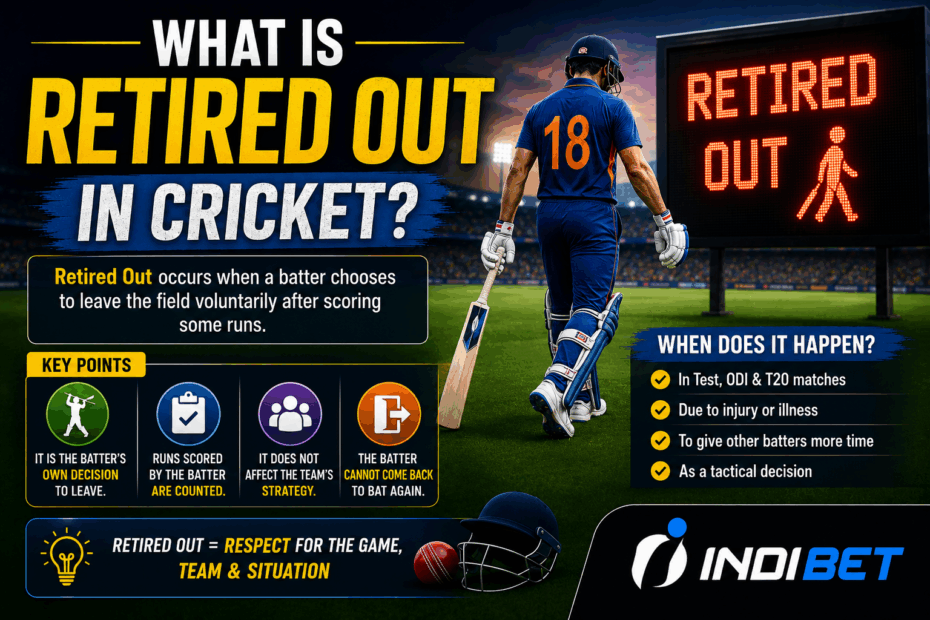
Retired out means when a batter, during batting, voluntarily leaves the field without any injury or illness. The batter takes the decision without the umpire’s permission, and the batter is only allowed to return to bat when the opposition team’s captain permits him. He can’t resume his innings.
When Can a Batter Be Retired Out?
The batter can be retired out from an innings when there is a dead ball, and he is replaced by another batter who has not been dismissed. Once the batter leaves the ground voluntarily, he can’t come back to bat unless the opposition’s captain gives permission.
Official ICC Rules for Retired Out
Under ICC Law 25.4, a batter can retire out voluntarily when the ball is dead by informing the umpires. A batter is counted as a retired out when he leaves the field without the permission of the umpire for any tactical reason other than injury or illness. A player can not resume the innings without the consent of the opposition team captain.
How Is Retired Out Different from Retired Hurt?
The key difference between retired out and retired hurt is the reason for leaving the field. Let’s understand more about retired out and retired hurt:
Retired Out
In retired out, when there is a dead ball, the batter can decide to leave the field without injury or illness and does not inform the umpires. It is a logical decision to bring the next teammate.
Retired Hurt
In retired hurt, a player faces sudden injury or falls ill, and the umpire permit to leave the field, to be retired (not out). He can resume before the innings end, after a teammate’s dismissal or retirement.
Why Do Teams Use the Retired Out Strategy?
Teams use the retired out strategy to maximize the run rate by bringing in a batter who is believed to score more in fewer balls. The retired out strategy is used to replace the slow batter during much-needed overs. This can be the turning point for the batting team and maximize their winning chance. To know what a diamond duck in cricket means, have a look at it or download the Indibet apk file to download the app.
Can a Retired Out Batter Return to Bat?
A retired out batter returning to bat depends on a condition. The retired out batter can only return if and only if the opposition’s team captain permit to resume the innings.
If the batter leaves the field due to injury or illness, he can return to bat after a batter’s dismissal or retirement.
Famous Examples of Retired Out in Cricket
Retired out is a rare case, but it has happened in many high-profile matches. The following are a few examples:
- Sonam Tobgay (Bhutan): First retired out in T20I history vs Maldives (2019).
- Ravichandran Ashwin (Rajasthan Royals): First IPL retired out vs Lucknow Super Giants (2022), a tactical move to bring in a power-hitter.
- Atharva Taide (Punjab Kings): Second IPL retired out (2023).
- Tilak Varma (Mumbai Indians): Controversial retired out vs Lucknow Super Giants in IPL 2025 while batting on 25, sparking debate over tactics vs fairness.
- Mohammad Rizwan (Melbourne Renegades): Retired out in BBL 2025-26 vs Sydney Thunder (Jan 12, 2026).
- Marvan Atapattu (Sri Lanka): Retired out during the 1999 World Cup vs New Zealand after a slow start, raising questions about sportsmanship
How Retired Out Affects Team Strategy?
Retired out has become a tactical tool in T20 cricket, giving teams more control during their innings. It lets captains bring in a batter when someone is not performing well or is scoring too slowly, especially in the death overs, to increase the run rate and get the highest possible score.
Coaches look at match-up data to decide when a batter’s strike rate is too low or when a new player has a record against the bowlers currently in the attack. This ability to change players makes the batting order a flexible resource, allowing teams to respond to the pitch conditions and the bowling strategy.
It needs clear communication to make sure it does not affect player feelings, as some people think it is not fair. Even though there is no guarantee it will work, the new batter could get out quickly or need time to get used to the situation, teams are starting to see it as a choice that puts the team’s goals first instead of focusing on individual achievements.
Other Unusual Ways a Batter Can Leave the Field
A batter can leave the field through some rare methods like hitting the ball twice, obstructing the field, and being timed out. Cricket is one of the most-loved sports around the world. Go to Indibet login and know who is the best cricketer in the world in different formats.
FAQs
Does retired out count as a dismissal?
Yes. It is counted as a dismissal, and the player can’t resume unless the opposition’s captain agrees.
Is retired out allowed in international cricket?
Yes. It is allowed in international cricket, and it was confirmed in 2026 that retired out is a valid and legal dismissal.
Can a captain ask a batter to retire out?
Yes. A captain can ask a batter to retire out if they know the batter on the ground is batting at a slow rate, and the next batsman can score maximum.
Is retired out common in T20 leagues?
Yes. Retired out is common in T20 leagues, like IPL, BBL, WPL, and Super Smash. In 2025, there are 26 examples of retired out in T20 matches. In 2026, it was seen six times in the first two weeks of popular T20 tournaments.
Does a retired-out batter receive bowling credit?
No. A batter does not receive any bowling credit.
