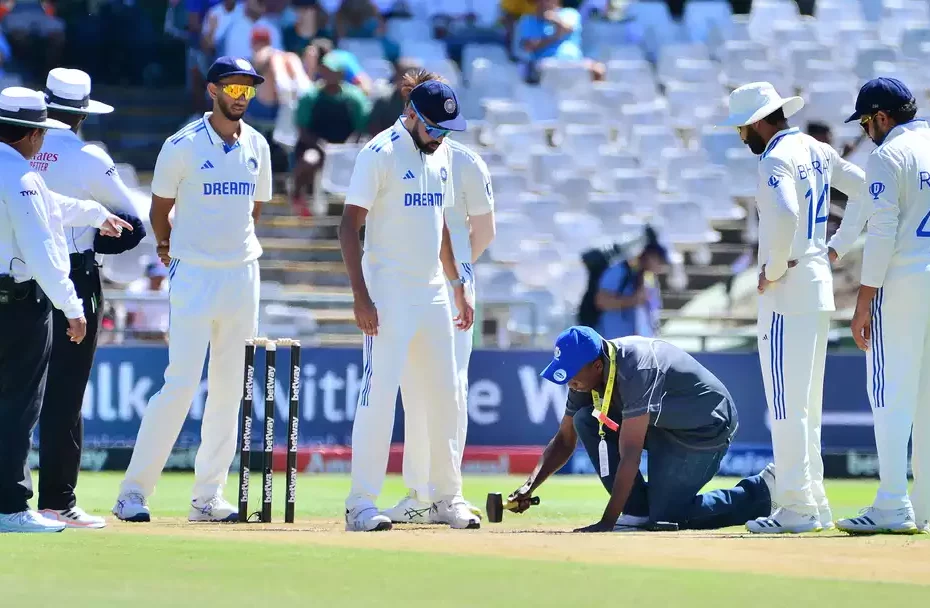
Cricket is one of the most watched sports in India. With its different formats of cricket like Test, ODI, and T20, cricket fans remain engaged throughout the year. Test Cricket match is the longest match format. It is played for five consecutive days. Here at Indibet, you can learn how many overs are in a Test cricket match, what the minimum number of overs should be played on each day, and interesting facts about overs in Test cricket.
How Many Overs Are Played in Test Cricket?
Test Cricket is one of the oldest form where cricketer’s skill, endurance, and temperament are tested. The match goes on for 5 days, each day the minimum number of overs is fixed which is 90 overs. These overs are divided into three session, each sessions is of 2 hours. And, in each session, 30 overs should be bowled, otherwise there will be some penalties which affect the team’s points.
For maximum overs, there is no limit to the number of overs in the whole match.
Why Test Cricket Has No Fixed Number of Overs?
Test Cricket has no fixed number of overs because its objective is to test batting and bowling endurance in a whole test match over a time. The main objective does not include to maximize runs in a limited time period. An innings last till the batting team is all out, declares or the fixed time runs out.
- No over limit for Batsmen
Batsmen can bat for long, and make big runs as there is no over limit. This keeps consistency to keep in batting form against bowlers.
- Captain’s Declaration
The captain of the team has to figure out when it’s the right time to end the innings of the cricket team they are playing for. The captain must think about getting a lead over the other team and still have enough time to bowl out the other team two times. The captain has to make a decision, about the cricket team they are playing for.
- Daily Over Target
The fielding team must bowl at least 90 overs in a six-hour day. If they do not meet this target, they can be fined or must bowl extra time to make up for it.
How Many Overs Are Scheduled in a Day of Test Cricket?
The rules of a Test cricket match are governed by the International Cricket Council (ICC). There are 90 overs are scheduled to play in a standard day of Test Match. These 90 overs are divided into three sessions: morning, afternoon, and evening or final session. The duration of each session is approximately 2 hours.
Standard 90 Overs Per Day
Minimum 90 overs are played in a day, these overs can be more than 90. If the playing time delays due to rain, or bad light, the minimum number of overs is recalculated. The umpire basically calculates the number of overs in 4 minutes.
What Happens If Overs Are Lost?
Overs are lost due to natural reasons like weather, rain, or bad light, in this case, the umpires decrease the daily over target. They calculated the number of overs to be decreased as one over for 4 minutes. For example, the match pauses for 36 minutes, then the 9 overs will be reduced from the daily target.
Time Adjustments:
If the bowling team fails to complete 90 overs in a day, they started playing 30 minutes earlier on next day to recover the lost overs.
Day 5 Exceptions
The bowling team can’t bowl extra overs on the final 5th day of the match. The match will end with lesser total overs.
Minimum Overs in Last Hour
On the final day, the number of overs played in earlier days does not matter, bowling team have to bowl minimum 15 overs in the final hour of last day to make sure the match finishes properly.
Slow Over-Rate Penalties
Overs are lost sometimes, when the bowling team bowls slow, fails to complete the daily target, in this case, the umpires apply slow over-rate penalty. They lose World Test Championship (WTC) points, one point for every over they miss. Umpires can also add 5 penalty runs against the fielding side if they find the team is wasting time on purpose.
Download Indibet apk, and enjoy a seamless experience during the live cricket matches.
How Are Overs Divided Between the Two Teams?
In traditional long-form cricket, Test cricket, there is no certain number of overs fixed for two teams. The team which bat first play till they all 10 players get out or the captain chooses to strategically declare the innings over. The bowling team has to bowl 90 overs in a day, which are divided into three sessions.
What Happens If All Overs Cannot Be Bowled?
A total of 90 overs in a day cannot be bowled due to certain reasons. If a bowler fails to deliver an over due to injuries, another bowler bowls in place of him and covers that over. If a team fails to bowl 90 overs in a day due to slow bowling, they will have a slow-over rate penalty and World Test Championship point penalties.
If the total overs cannot be bowled due to delays like weather, rain, or light, the umpire gives an extra 30 minutes to make up the deficit.
Test Cricket vs ODI vs T20: Overs Comparison
Test Cricket, ODI, and T20 are different formats of cricket. These formats vary by the number of overs and innings in a match. Below is the overs comparison among T20, ODI, and Test.
T20: 20 overs per side, single innings, lasting about 3 hours.
ODI: 50 overs per side, single innings, taking roughly 8 hours.
Test: Unlimited overs, two innings per side, lasting up to 5 days
Can a Test Match End Before All Scheduled Overs?
Yes. If one team is able to chase the opposition team before all scheduled overs, or on day 4. If a batting team gets all out, or they declare the innings closed. The match ends only when a team gets out in both innings.
Interesting Facts About Overs in Test Cricket
4-Ball Beginnings: The first official Test match was played in 1877. It had a really simple start. Then an over had just four balls.
The 8-Ball Experiment: For a time, Australia and South Africa did things a bit differently. They had eight balls in an over. This was supposed to make the game go faster by reducing the number of times the teams had to switch. The standard 6-ball over eventually became what everyone used in 1979.
No Maximum Limit: A team’s turn to bat only ends when they are all out or when they decide to stop batting or when they run out of time on Day 5. This means that the number of overs a team can bat is basically unlimited. The team can just keep batting and batting.
Follow Live Test Cricket Matches
Being a cricket fan and following a reliable platform to follow live test cricket matches can spike your excitement. Indibet is a growing online gaming platform, popular for secure and safe features. You can enjoy live cricket matches and other sports like baseball, volleyball, kabaddi, and tennis. For more cricket facts, login Indibet now and stay tuned for upcoming cricket matches.
